Explore Thames River Cruises in London | Highlights, visitor’s guide & more

The River Thames is the defining natural feature of Southern England, flowing 215 miles from the Cotswolds through London and out into the North Sea. More than a waterway, it serves as London's historic backbone, separating the city's north and south banks while connecting centuries of history and offering a unique perspective on the capital.

Plan your visit to the River Thames

Opening hours

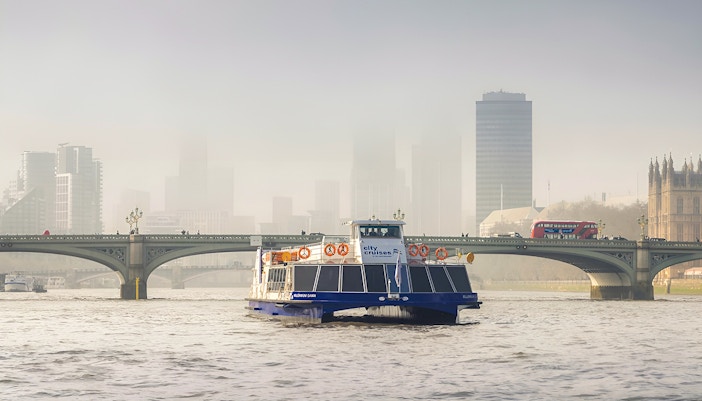
Thames River cruises operate daily from 10am until the late afternoon/early evening. Dinner and evening cruises on the Thames River have later departure times.

Seasonal changes: Schedules are more frequent in the peak summer season (May to September) and reduced during the winter months.

Closed: Most major Thames River cruise services operate all year round, including public holidays, but they are often closed on Christmas Day (December 25) and occasionally Boxing Day (December 26).
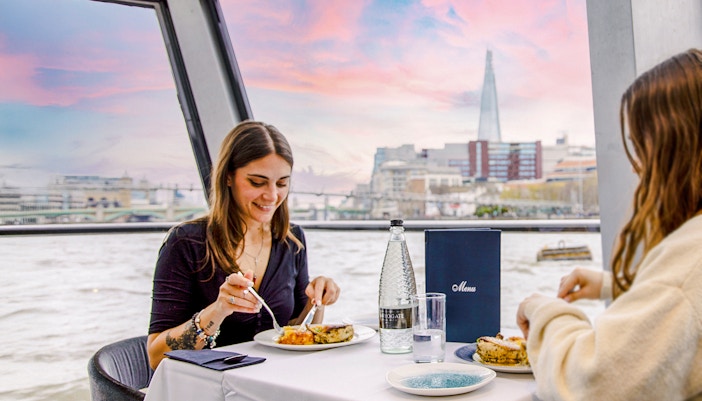
Best time to go on a Thames cruise

Best time to visit

Best time of the year

  • Shoulder seasons (April–May & Sept–Oct): Excellent for cruising the Thames River with mild weather and fewer crowds than summer. September hosts the annual 'Totally Thames' festival.
  • Summer (June–Aug): Best weather, but highest crowds and prices for any Thames River experience.
  • Winter (Nov–Mar): Least crowded, but colder with shorter daylight hours for enjoying the open deck of the Thames River cruise.

Best time of the week

  • Weekdays: Offer the least crowded Thames River experience, particularly mid-morning or afternoon cruises.
  • Weekends: Generally see more crowds; aim for early mornings (around 10am) or evenings to avoid peak times.

Best time of the day

  • Daytime (11am–3pm): Ideal for general sightseeing and daylight views of the landmarks along the Thames River.
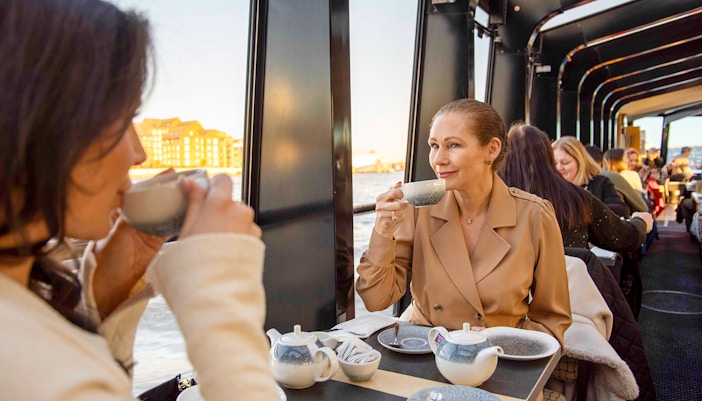
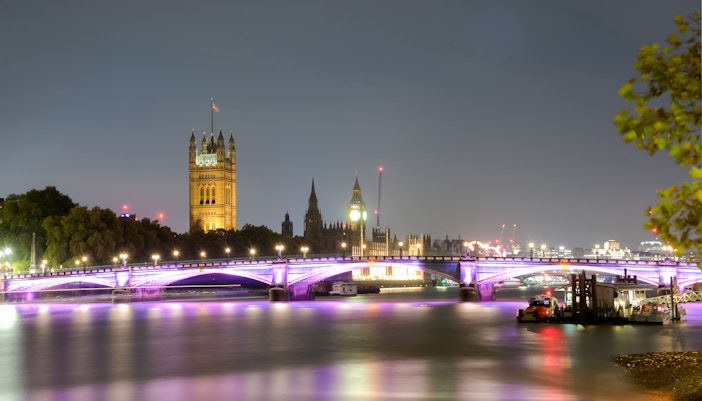
  • Evening: Perfect for dinner cruises to see London's landmarks illuminated at night from the River Thames.

Location

The Thames River flows through London, but major piers for cruises are located in central areas:

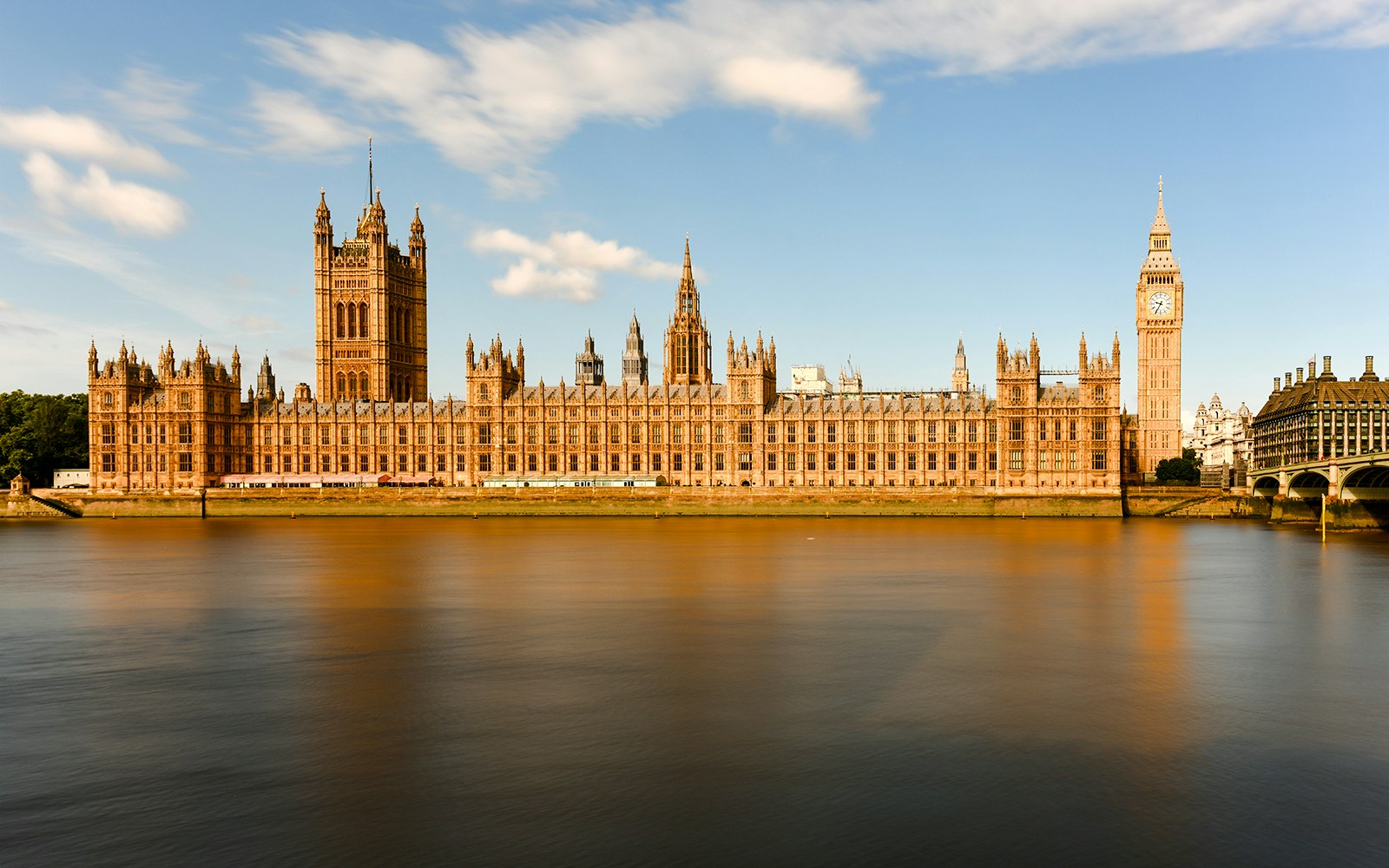
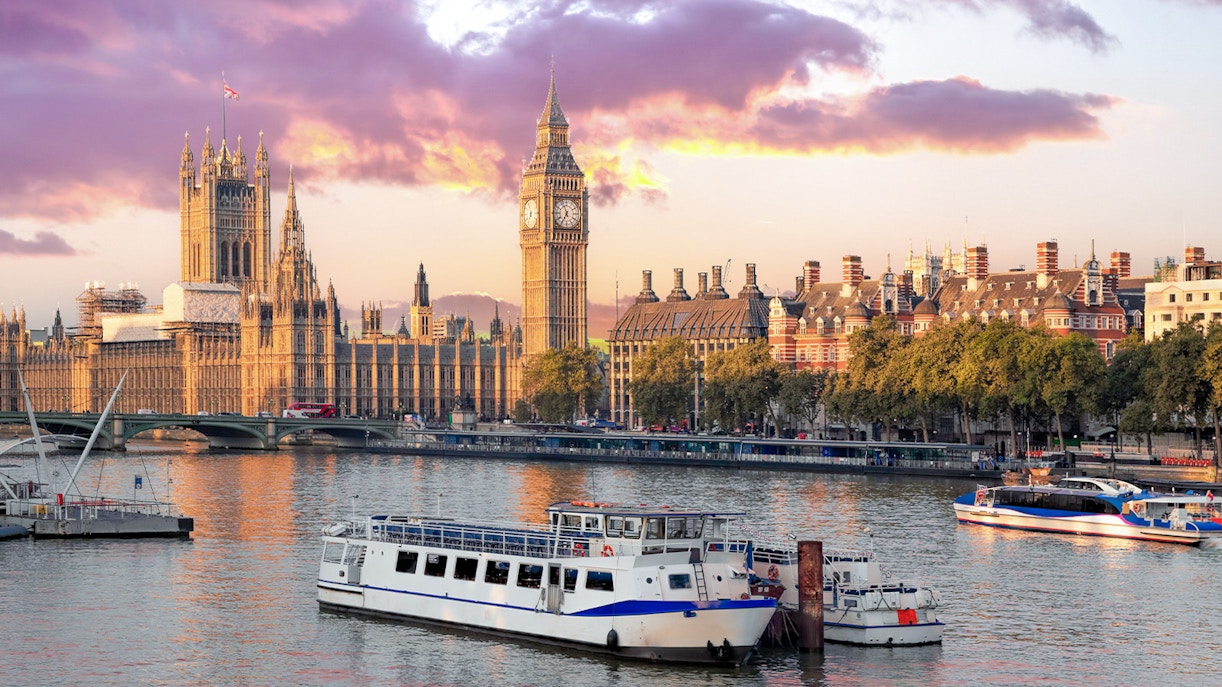
  • Westminster Pier: Victoria Embankment, London SW1A 2JH (Nearest to Houses of Parliament and Big Ben).
  • Tower Pier: Lower Thames St, London EC3N 4DT (Nearest to Tower of London and Tower Bridge).
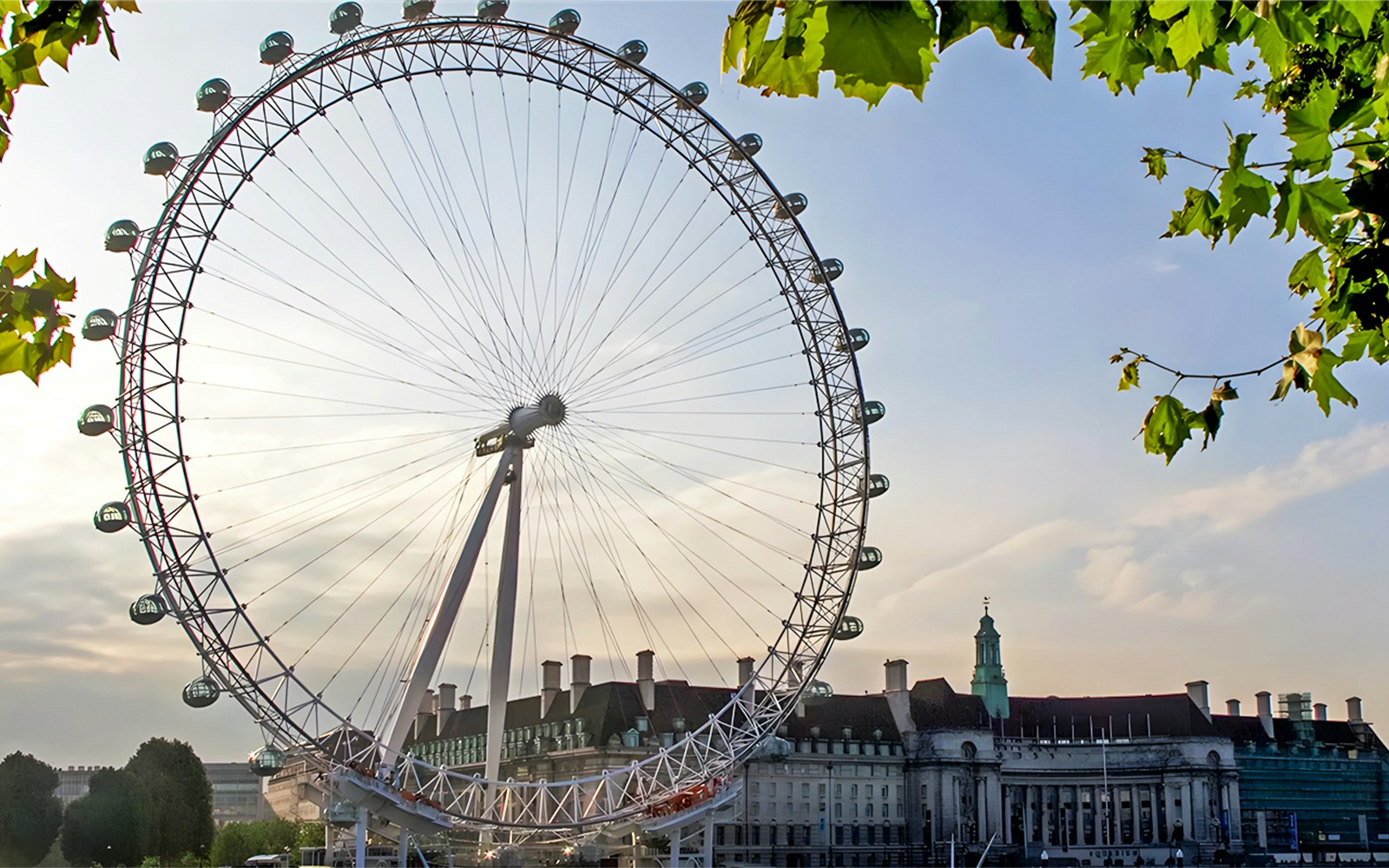
  • London Eye Pier: Waterloo, London SE1 7PB (Next to the London Eye).

Accessing the Thames River is easy via London's extensive transport network:

  • Tube & rail:
    • Westminster Pier: Westminster station (Circle, District, Jubilee lines).
    • Tower Pier: Tower Hill station (Circle & District lines) or Tower Gateway DLR station.
    • London Eye Pier: Waterloo station (Jubilee, Northern, Bakerloo, Waterloo & City lines, and National Rail).
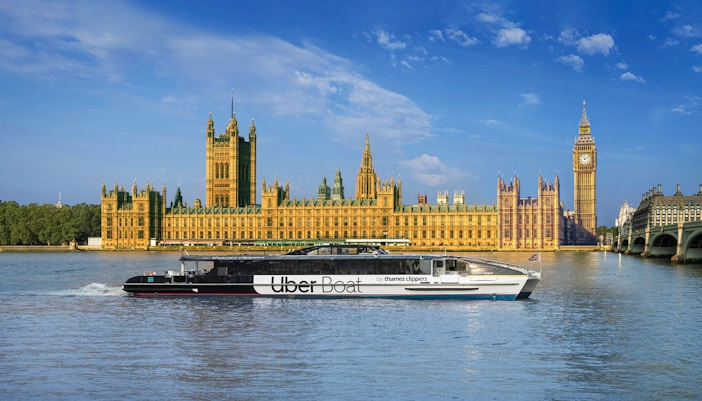
  • River bus (Uber Boat by Thames Clippers): A network of Thames River bus routes stops at all major piers, offering the most direct transport on the Thames River itself.
Getting to Thames River

What to see along the Thames River?

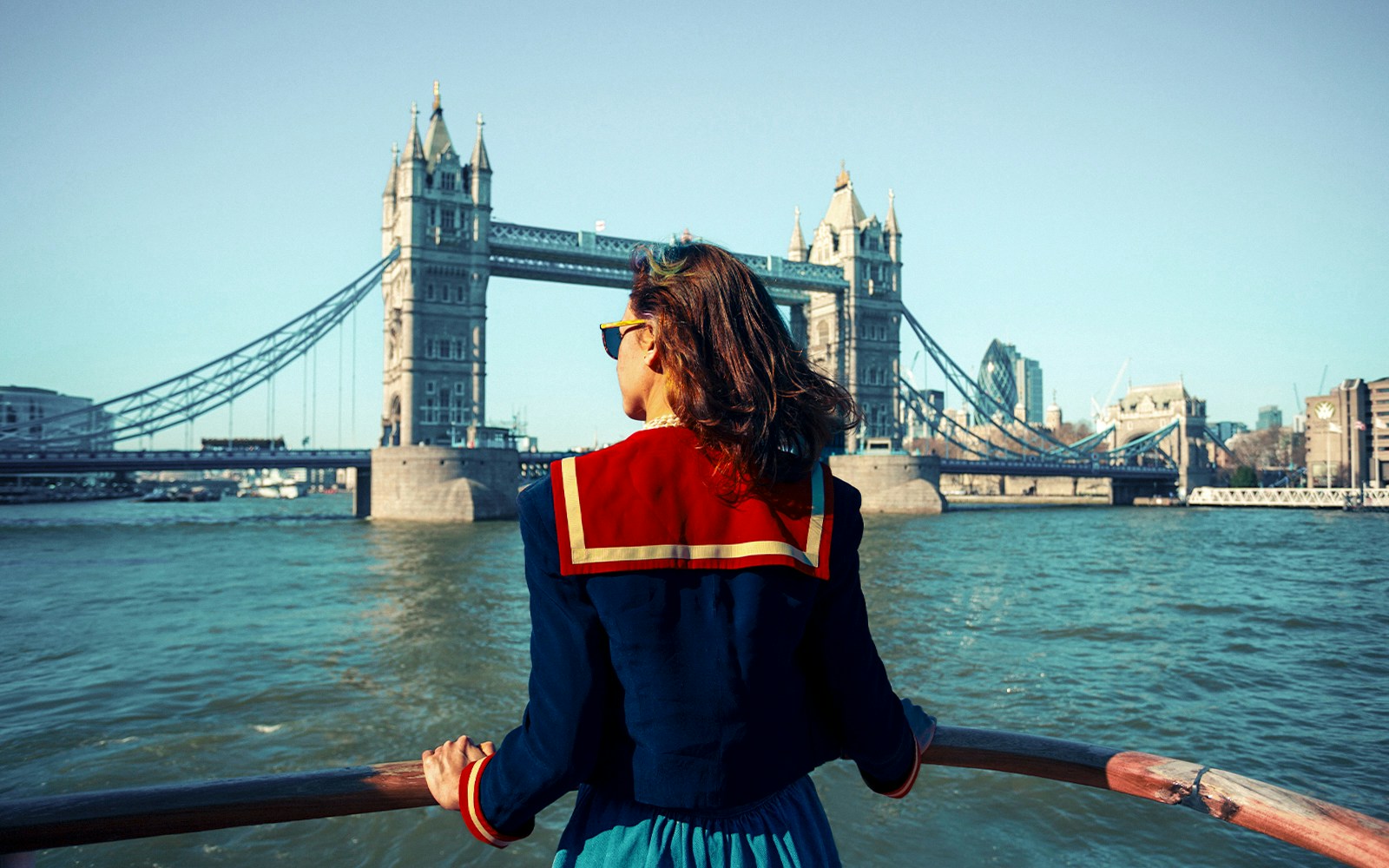
Young woman on a boat viewing Tower Bridge in London.

Tower Bridge (East London)

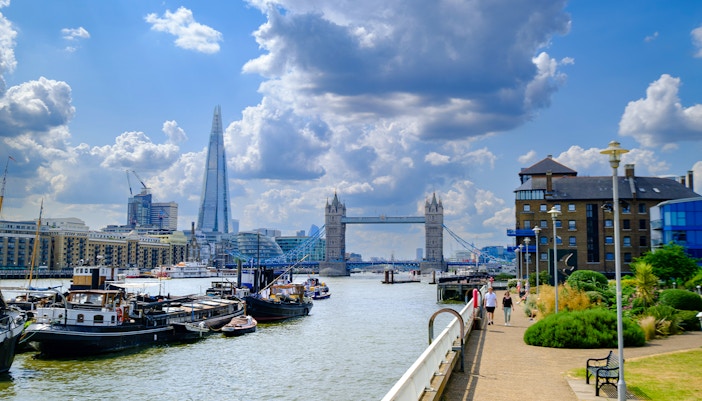
This Victorian bascule and suspension bridge is a defining symbol of the River Thames. Its Gothic Revival towers and the glass floor walkways inside the bridge offer unparalleled views of the river traffic and the London skyline.

Tip: Watch for a bridge lift for a unique spectacle over the Thames River.

Big Ben and Houses of Parliament along the River Thames, London, UK.
London Eye with nearby buildings, viewed during afternoon tea experience.
St Paul's Cathedral viewed from Millennium Bridge, London, part of Golden Tours 24Hrs Hop On Hop Off.
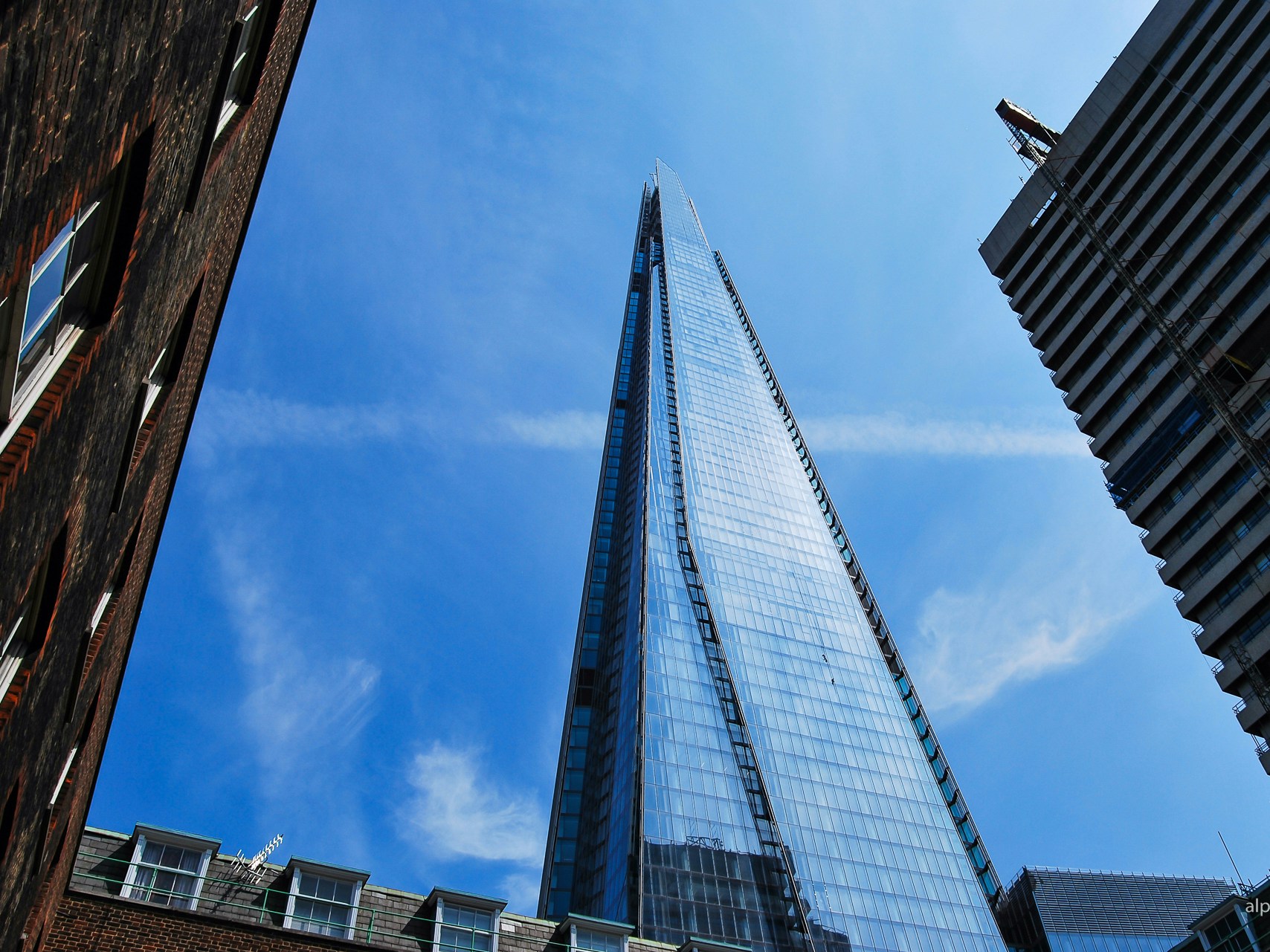
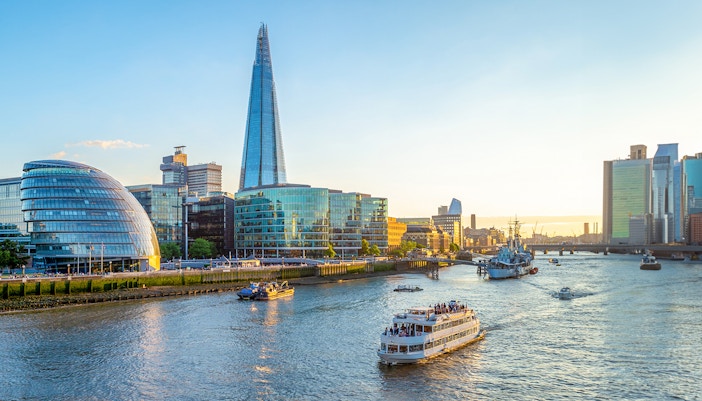
The Shard skyscraper in London against a clear blue sky.

History of the Thames River in a nutshell

The Thames River is truly "liquid history," shaping London for millennia. Geologically, the modern river was born when an ice sheet diverted its course about 450,000 years ago. Historically, the Romans founded Londinium on the Thames in AD 43, recognising it as the perfect hub for commerce.

This famous waterway has witnessed pivotal moments: the signing of Magna Carta occurred on its banks in 1215. However, centuries of unchecked waste led to the infamous "Great Stink" of 1858, which forced London to revolutionise its sanitation with a vast sewer network. The once "biologically dead" Thames River is today a success story; after modern cleanup efforts, this river is now a thriving ecosystem, boasting over 120 species of fish.

Depth of the Thames River

The depth of the Thames River varies along its course. In central London, near London Bridge, it's pretty shallow—just about 1.5 meters deep. But head to the Thames Estuary, and you're talking up to 66 feet deep, letting big ships sail through! And at its mouth, it stretches 11 miles wide!

Flora and fauna

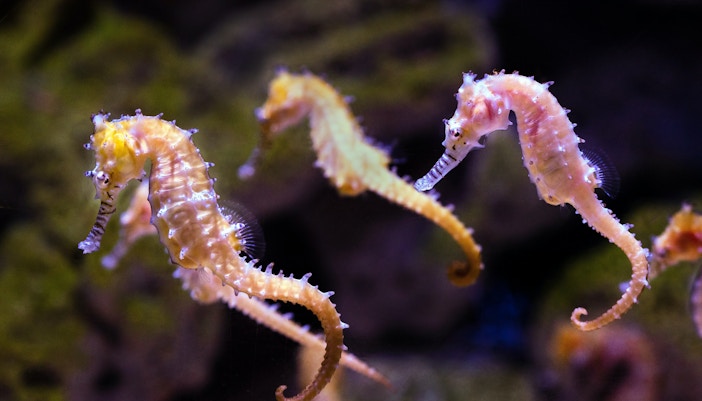
The Thames River is a remarkable example of ecological recovery, moving from being "biologically dead" in the 1950s to supporting a diverse ecosystem today. The river and its estuary are home to over 125 species of fish, including bass, flounder, and the critically endangered European eel. Astonishingly, marine mammals like seals (both Grey and Harbour) are frequently spotted, with a population numbering in the thousands. Even rare visitors like porpoises and seahorses have been recorded in the tidal Thames River.

The Thames Path

A unique feature of the Thames River is the Thames Path National Trail. This 184-mile (296-kilometre) walking route is the only trail in Europe to follow a major river for its entire length, from its source in the Cotswold Hills to the Thames Barrier in London. It offers views of picturesque countryside, historic towns, and famous London landmarks, providing a fantastic way for visitors to engage with and appreciate the non-tidal and tidal sections of the Thames River firsthand.

Tips for visiting the River Thames

  • Book your cruise early: Reserve your Thames River cruises online in advance to save money (up to 20%) and guarantee your spot, especially for popular dinner or high-speed tours.
  • Ride a river bus: Use the Uber Boat by Thames Clippers commuter service for a fast, scenic, and cost-effective way to travel between major London piers.
  • Chase the light: Morning cruises offer fewer crowds, while evening cruises provide a stunning view of the illuminated city landmarks from the Thames River.
  • Walk the path: Explore the Thames Path, a level riverside trail that is great for easy walks and offers fantastic views, particularly near cultural hotspots like the South Bank.
  • Accessibility: Many modern Thames River sightseeing boats and piers (like Westminster and Tower) offer step-free access and designated wheelchair spaces.

Frequently Asked Questions about the Thames River

The River Thames begins as a cluster of springs near Kemble in the Cotswolds, England, where charming rolling hills mark its picturesque start.

More Reads

Plan Your Visit

Facts

Map